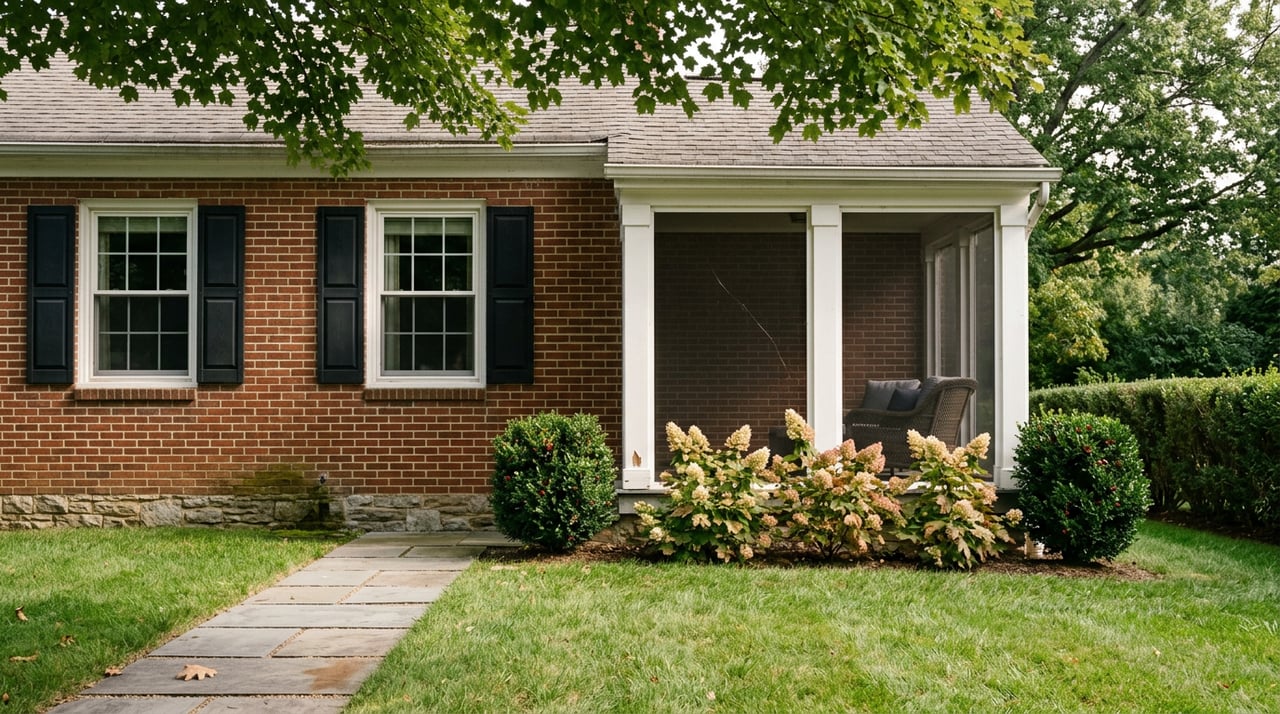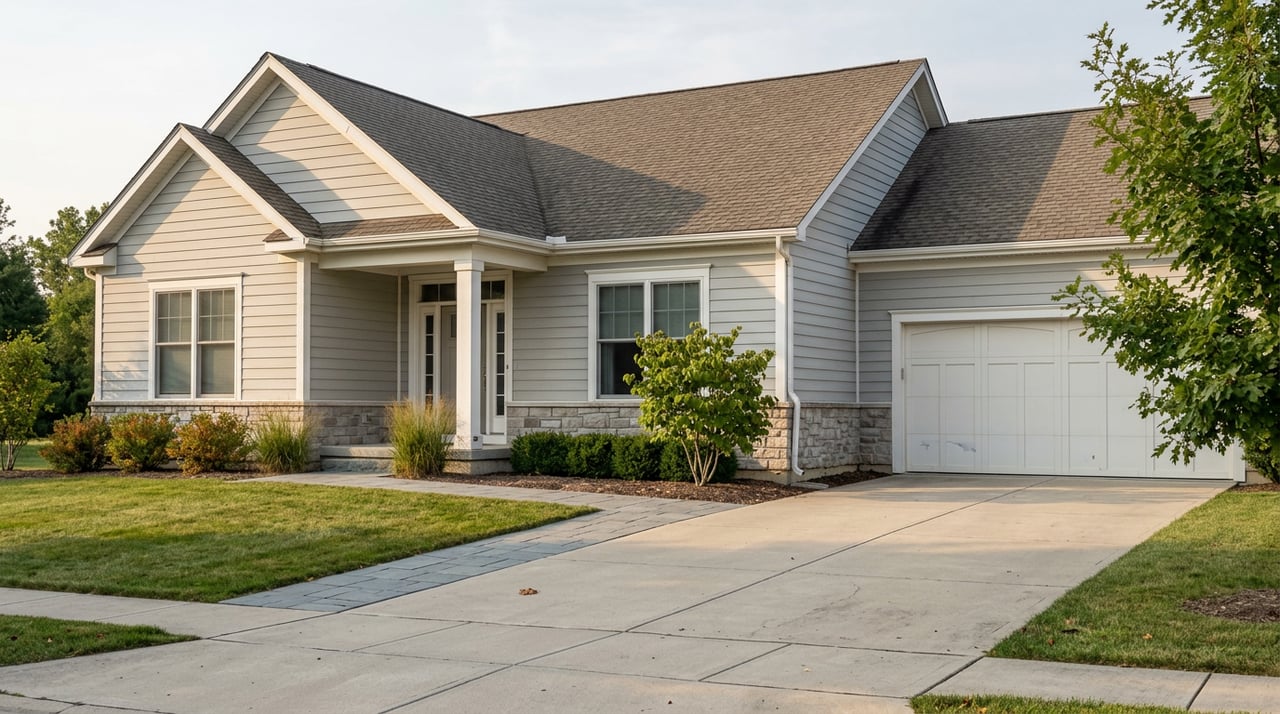
Picture two listings that look nearly identical. Same builder, same floor plan, same price, same "Middletown, DE" in the address line. One buyer closes and gets a $3,000 credit toward their tax bill that the other buyer never even hears about. Nothing on either listing sheet explains why. The difference isn't the house. It's a boundary line that most buyers never think to ask about, because nothing about the mailing address tells you it exists.
That line is the actual corporate limit of the Town of Middletown, and it matters more at the settlement table than almost anywhere else in the home buying process.
Middletown the Town Is Smaller Than Middletown the Address
"Middletown, DE" gets used loosely. It covers a school district, a postal zone, and a general sense of place that stretches well past what the town itself actually governs. The Town of Middletown's own zoning map puts its corporate limits at roughly 11.96 square miles. Everything inside that line falls under town government, town police, town water and sewer, and town taxation. Everything outside it, even if the mail still says Middletown, sits in unincorporated New Castle County and answers to different rules.
That distinction sounds like a technicality until you get to closing.
The Exemption That Only Half of Middletown Can Use
Delaware first-time buyers get two separate breaks on realty transfer tax. The state offers a 0.5 percent reduction on purchases up to $400,000. New Castle County offers a second, larger break: a 0.75 percent exemption on the county's own local transfer tax, again capped at the first $400,000 of value.
Here's the part that catches people off guard. The county's exemption statute applies specifically to transfers within the unincorporated areas of the county. The Town of Middletown collects its own separate local transfer tax under its own town ordinance, and that county exemption simply doesn't reach inside the town's corporate limits. The same is true in Newark and a handful of other incorporated towns in the county. If your parcel sits inside Middletown proper, the county break isn't on the table no matter how long you've been house hunting or how first-time-buyer you are.
On a $400,000 purchase, that exemption is worth $3,000. It stays worth $3,000 even above that price point, since the cap applies to the first $400,000 of value regardless of what the home ultimately sells for.
| Scenario | County first-time buyer exemption |
|---|---|
| Parcel in unincorporated New Castle County | Worth up to $3,000 off the local transfer tax |
| Parcel inside Middletown's corporate limits | Not available under this exemption |
Same buyer, same qualifications, same $400,000 purchase. The only variable is which side of a line drawn on a recorded plat the house happens to sit on.
Why the Boundary Keeps Moving
This wouldn't matter much if Middletown's town line were fixed and everyone already knew where it fell. It isn't fixed. The town's most recent comprehensive plan describes Middletown as almost completely built out within its existing boundary, with very little open land left inside the current limits. That's exactly why the town keeps annexing. The plan spells out that continued growth depends on "limited annexation and expansion" alongside infill.
The town's own zoning records back that up in granular detail. Flip through Middletown's annexation log and you'll find individual actions covering 315.38 acres in one filing, 100 acres in another, 75.88 acres, 41.18 acres, 25 acres, parcel by parcel over years, each one a separate ordinance moving the corporate line a little further out. This isn't ancient history. Middletown has spent the last two decades absorbing land one petition at a time, which is also why it's grown into one of the fastest expanding towns in the state, with its population climbing more than 200 percent between 2000 and 2010 alone.
A boundary that moves this often, this piecemeal, is not something a buyer can assume based on a ZIP code or a school assignment. It has to be checked parcel by parcel, the same way the town itself adds land parcel by parcel.
Two Developments, Two Approving Bodies
The clearest way to see this play out is to look at who actually approved what.
Back in 2004, Middletown's town council approved a Walmart Supercenter as part of the roughly 1,100-acre Westown development. Employers that followed over the years, including Amazon, Datwyler, Clarios, and Breakthru Beverage, built out around that anchor. A town council doesn't approve projects outside its own jurisdiction. That approval sitting with Middletown's council is a strong signal that Westown sits inside the corporate limits.
Compare that to Bayberry, the roughly 1,500-acre, 2,700-home community developed north of town along Boyds Corner Road. When the Bayberry Town Center, anchored by a new Weis Markets, Delaware's fourth Weis location and its first in New Castle County, needed final site plan sign-off, that approval came from the New Castle County Council, not from Middletown's town council. A project can carry the Middletown name, sit a few miles from Main Street, and still be answering to the county rather than the town.
That's two large, well-known developments on opposite sides of the same invisible line, approved by two different governments, both comfortably described as "Middletown" in every piece of marketing material either one has ever produced. And because annexation happens in stages, it's entirely possible for a single large community to have some phases inside town limits and others still outside it as build-out continues over several years. The development's name tells you nothing reliable about which side any specific lot falls on.
What to Actually Do Before You Write an Offer
None of this requires guesswork on your part. It requires one question asked early, ideally before you're emotionally attached to a specific house.
Delaware requires an attorney at every residential closing, so you already have a professional in the deal whose job includes sorting this out. Ask that attorney, or ask your agent to check on your behalf, whether the parcel you're considering sits inside Middletown's corporate limits or in unincorporated New Castle County. That status is a matter of public record tied to the recorded annexation ordinance and the New Castle County parcel record, not a matter of opinion or mailing address.
Do this before you finalize your cash-to-close estimate, not after. A $3,000 swing changes what you actually need to bring to the table, and it's a much easier conversation to have while you're still comparing houses than after you've already gone under contract on one.
A Few Questions Buyers Usually Ask Next
Does this affect sellers too? No. The county exemption applies to the buyer's share of the local transfer tax. Sellers pay their share regardless of which side of the line the property sits on.
Does this only matter for new construction? No. The exemption is tied to where the parcel sits, not how old the house is. A resale property in unincorporated New Castle County qualifies the same way a brand new one does. A resale inside Middletown's town limits does not, for the same reason a new build there doesn't.
How do I find out which side of the line a specific house is on? Ask your agent or your settlement attorney to check the property against the recorded annexation record and the New Castle County parcel database. It's a quick check and it's worth doing before you write an offer, not during closing week.
If you're weighing a first home in or around Middletown and want someone who already knows exactly where these lines fall, Furrowh Homes can walk through the specific parcel with you before you ever sign a contract. Request a free home valuation or just start a conversation about the address you're considering. Shawn and Charis have spent years working this exact corner of New Castle County, and this is precisely the kind of detail worth catching before it becomes a surprise at the settlement table.